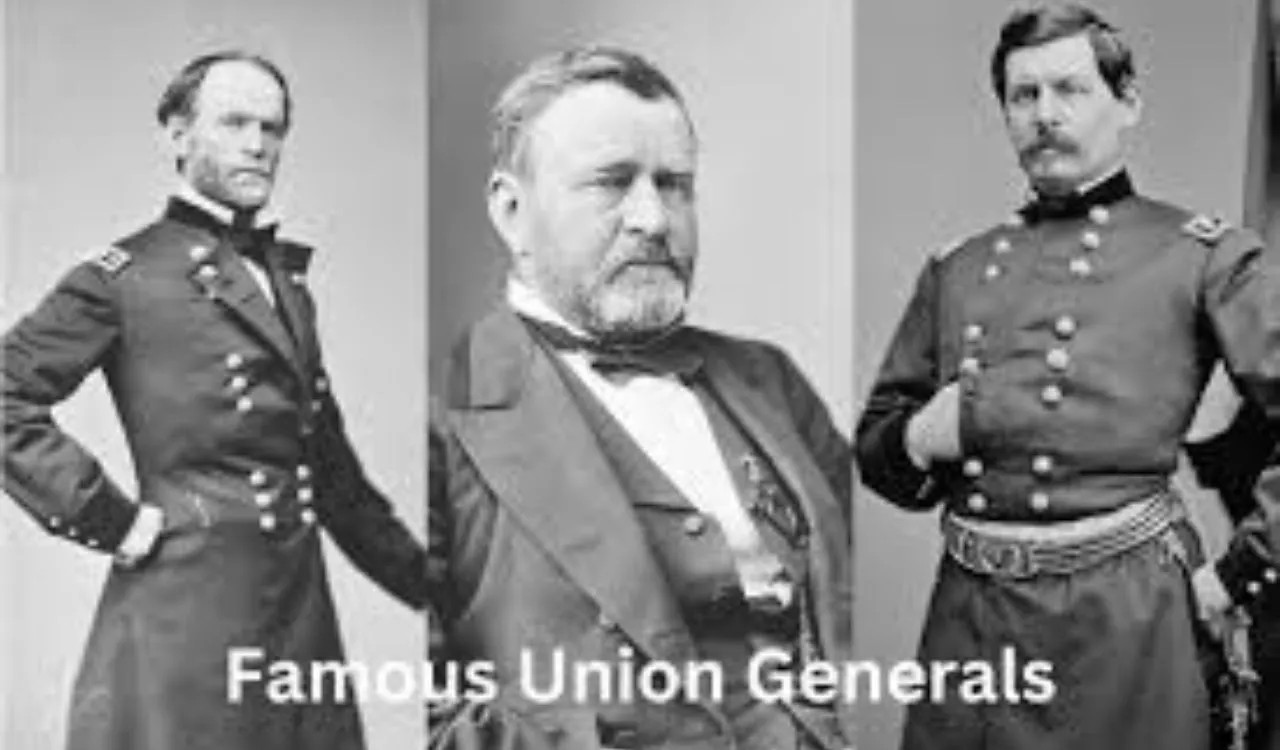
I’ll be sincere, once I first started digging into union generals, I thought it’d be an honest listing of names and ranks. But the deeper I went, the more I realized these weren’t simply military figures, they were personalities, strategists, risk-takers, and once in a while even arguable leaders who fashioned the final results of an entire state’s destiny throughout the American Civil War. Each decision they made on the battlefield carried weight some distance past the instant, influencing no longer just victories, but the very direction of the USA itself.
As I explored their testimonies, what stood out to me wasn’t just their military fulfillment or failure—it became how exclusive they had been from one another. Leaders like Ulysses S. Grant brought relentless dedication, whilst others approached war with caution, approach, or even hesitation. Some were celebrated as heroes, others criticized closely, but all of them played a role in shaping the identification and strength of the Union Army in the course of one of the most defining periods in American history.
What makes this topic even more fascinating, at least from my angle, is how those generals weren’t just preventing battles—they had been navigating politics, stress, and public opinion all at once. Understanding who they had been, how they led, and why they mattered gives a very exclusive lens to the war itself. And surely, after you begin connecting the dots, the tale of Union leadership turns into far more compelling than any textbook summary.
Who Were the Union Generals in the American Civil War
Union generals had been the senior Navy leaders who commanded the armies of the North in the course of the Civil War. Their number one obligation turned into keeping the Union, suppressing the Confederate insurrection, and keeping control over key territories. But their position went beyond issuing battlefield orders. They had to manage logistics, coordinate troops throughout full-size regions, and adapt speedy to changing situations.
These generals got here from diverse backgrounds. Some have been professionally educated at naval academies, whilst others rose thru the ranks because of condition. This blend created both electricity and warfare within management. While some generals excelled in method, others struggled under stress.
The term “union generals” represents greater than rank. It displays a collective management pressure that formed the war’s direction. Their choices affected not only battles, but additionally morale, politics, and the lengthy-time period harmony of the country.
Quick Comparison Table of Union Generals and Their Impact
| General | Leadership Style | Key Strength | Major Campaign / Battle | Biggest Contribution | Notable Weakness |
| Ulysses S. Grant | Aggressive & persistent | Strategic coordination | Vicksburg Campaign | Unified Union strategy and constant pressure on Confederacy | High casualty rates in some campaigns |
| William Tecumseh Sherman | Psychological & total war | Disruption tactics | March to the Sea | Crippled Southern infrastructure and morale | Criticized for harsh methods |
| George B. McClellan | Cautious & methodical | Army organization | Peninsula Campaign | Built a strong and disciplined army | Hesitation and missed opportunities |
| George Meade | Defensive & calculated | Tactical positioning | Battle of Gettysburg | Secured a turning point victory | Limited follow-up aggression |
| Philip Sheridan | Fast & aggressive | Mobility and speed | Shenandoah Valley Campaign | Disrupted Confederate supply lines | Risk-heavy decisions |
Why Union Generals Were Crucial to the War’s Outcome
Winning the Civil War wasn’t pretty much having extra foot soldiers or resources. Leadership performed a large role, and that’s where union generals made the distinction. They needed to coordinate a couple of armies, plan long-term strategies, and make sure their troops remained inspired even after setbacks.
One of the largest challenges they confronted was consistency. Early in the conflict, leadership was regularly fragmented. Some generals hesitated, lacking key opportunities. Others lacked the aggression to push ahead. Over time, but more potent leadership began to emerge.
Effective generals understood that battle wasn’t just about winning battles—it became about sustaining momentum. They centered on weakening the Confederacy’s sources whilst strengthening their personal function. This strategic thinking, blended with endurance, in the long run shifted the stability in prefer of the Union and took the battle toward its end.
Ulysses S. Grant – The Relentless Commander
Ulysses S. Grant stands out as one of the most decisive Union generals of the Civil War. What made him unique turned into his relentless technique. He didn’t backtrack without problems, even when facing setbacks. Instead, he kept pushing ahead, sporting down the enemy thru continuous stress.
Grant’s fulfillment at Vicksburg turned into a turning point. By securing manipulate of the Mississippi River, he effectively cut the Confederacy in two. This wasn’t only a tactical win—it turned into a strategic breakthrough. Later, as the general commander of Union forces, he coordinated more than one campaign, making sure that pressure was applied on all fronts.
Some criticized his competitive techniques, calling them high-priced. But Grant understood something essential: hesitation regularly prolonged battle. His willpower shortened the war and played a key role in securing victory.
William Tecumseh Sherman – The Master of Total War
William Tecumseh Sherman approached the struggle in another way. He believed in breaking not simply the enemy’s military, but also their will to combat. His famous “March to the Sea” tested this philosophy really.
Sherman’s approach centered on destroying infrastructure—railroads, deliver lines, and sources. This wasn’t about cruelty; it was about finishing the battle more quickly. By concentrating on the South’s ability to maintain itself, he compelled the Confederacy into a weaker position.
What made Sherman effective was his understanding of mental struggle. He knew that worry and disruption can be as powerful as direct combat. His campaigns left an enduring impact and redefined how wars may be fought.
Not everybody agreed with his techniques; however, there’s no denying his impact. He changed the policies of engagement and helped bring the war to a decisive end.
George B. McClellan – The Cautious Strategist
George B. McClellan is one of the most debated Union generals. On one hand, he was extraordinary at organizing and schooling troops. His navy became disciplined, properly organized, and dependable to him.
On the other hand, his careful nature often held him back. McClellan frequently hyped up enemy energy, leading to delays in movement. This hesitation pissed off political leaders, particularly President Lincoln, who wanted extra aggressive moves.
Despite his flaws, McClellan’s early contributions have been tremendous. He built a sturdy basis for the Union Navy, which later generals benefited from. His story is a reminder that leadership isn’t just about strengths, it’s additionally approximately overcoming obstacles.
George Meade – The Hero of Gettysburg
George Meade won’t usually be the first call humans mention; however, his position at Gettysburg became vital. Taking command simply days earlier than the war, he faced substantial strain. Yet, he managed to steer the Union army to one of its most vital victories.
Gettysburg wasn’t simply any other struggle. It became a turning factor. Meade’s defensive method forced Confederate troops into disadvantageous positions, in the long run leading to their retreat. His calm and calculated leadership played a key role in this achievement.
Interestingly, Meade didn’t get as great a reputation as others. Some critics felt he should have pursued the enemy extra aggressively after the victory. Still, his contribution remains plain. Without his management at that moment, the final results might have been very different.
Philip Sheridan – The Aggressive Cavalry Leader
Philip Sheridan added pace and aggression to the battlefield. Unlike some generals who hesitated, Sheridan acted speedy and decisively. His leadership within the Shenandoah Valley campaigns proved his effectiveness.
Sheridan understood the importance of mobility. His cavalry devices moved rapidly, disrupting enemy plans and developing opportunities for Union forces. This method made him a treasured asset in later levels of the struggle.
One of his most famous moments came in the course of the Battle of Cedar Creek, wherein his dramatic return to the battlefield rallied troops and turned the tide. It’s the kind of tale that almost feels cinematic—but it truly befell.
Sheridan’s fashion confirmed that ambitious action, while mixed with timing, could produce splendid results.
Key Battles Led with the aid of Union Generals
Several battles spotlight the impact of Union generals. Gettysburg, led by Meade, marked a turning point. Vicksburg, under Grant, gave the Union manage of the Mississippi River. Sherman’s Atlanta Campaign weakened Confederate resistance appreciably.
Each war tells an extraordinary story. At Antietam, as an example, the Union managed to halt Confederate development, even though it wasn’t a decisive victory. Still, it gave the North a strategic benefit.
These battles weren’t pretty much numbers. They have been made under strain. An unmarried flow should alternate everything. That’s what makes analyzing these moments so fascinating.
When you study the bigger picture, it becomes clear: those generals weren’t simply reacting—they had been shaping the route of records with each decision they made.
Leadership Styles of Union Generals Compared
Not all Union generals led in the same manner, and that’s what makes this subject matter so interesting. Grant changed into competitive and persistent. McClellan changed into cautious and methodical. Sherman focused on the overall battle, while Meade trusted in protecting strength.
This diversity created both blessings and demanding situations. Different conditions required extraordinary approaches. Sometimes warning avoided disaster. Other times, boldness secured victory.
Think of it like a team. Not everybody plays the identical role, but each contributes to the final results. The Union benefited from having leaders with numerous strengths.
If there’s one lesson here, it’s that leadership isn’t one-size-fits-all. Success frequently comes from adapting to situations and know-how while to act—and when to hold back.
Legacy of Union Generals in Modern History
The impact of Union generals didn’t quit when the warfare ended. Their strategies formed modern naval thinking, and their decisions helped outline the future of the United States.
Grant went on to become president, bringing his management experience into politics. Sherman’s ideas encouraged navy doctrine for generations. Even lesser-recognised generals contributed to rebuilding the country at some stage in Reconstruction.
Their legacy is also cultural. Stories in their leadership strive to encourage discussions about approach, resilience, and decision-making. Whether in commercial enterprise, sports activities, or ordinary life, the principles they validated nevertheless follow.
In many methods, their impact is going beyond record books. It’s a part of a larger narrative about leadership under stress—and the alternatives that define results.
Frequently Ask Questions
Who was the most successful Union general?
Many historians consider Ulysses S. Grant the most successful due to his overall command and ability to secure decisive victories that led to the Union’s success.
How many Union generals were there?
There were hundreds of Union generals, including brigadier generals, major generals, and others who served in different capacities during the Civil War.
What made Union generals different from Confederate generals?
Union generals often had more resources and manpower, but their success depended heavily on leadership, coordination, and long-term strategy.
Which Union general had the biggest impact on the war?
Grant and Sherman are often highlighted for their major campaigns and strategies that significantly weakened the Confederacy.
Did all Union generals agree on strategy?
No, they often had different approaches. Some favored aggressive tactics, while others preferred cautious planning, leading to both conflict and balance in leadership.