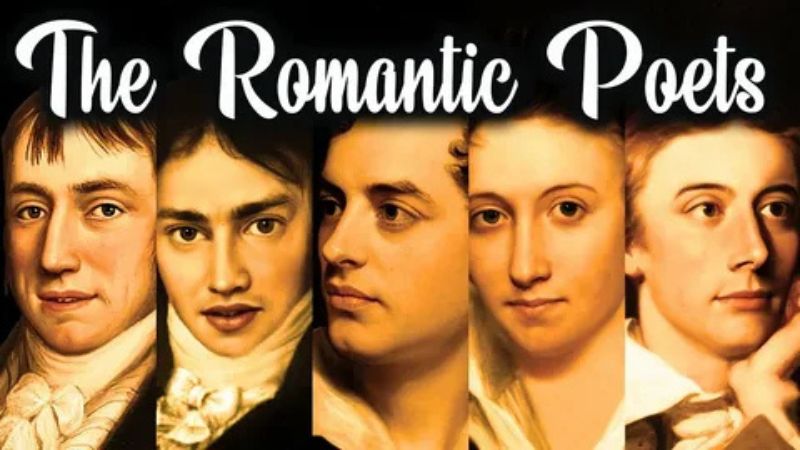
Romantic poetry is full of rich symbolism that brings emotions, nature, imagination and myth to life. Romantic poets like Wordsworth, Keats, Shelley, Byron, and Coleridge used symbols to express deep personal feelings, philosophical ideas and reactions to the world around them. In this article, we will explore how symbols work in Romantic poetry, explained in simple and clear language.
From the use of nature and supernatural elements to mythological and literary allusions, Romantic poets turned ordinary images into powerful symbols that still move readers today.
Understanding these poetic symbols helps us unlock the deeper meaning behind famous poems and appreciate the beauty of Romantic literature.
The Use of Imagery in Romantic Poetry
In romantic poetry, imagery is far more than just a picture; it’s a window into how the writer feels and concepts. Poets use vivid syntax to arouse the reader’s creativity and senses, building the symbolic meaning.
In this regard, terrain, stars, and nightingale are more than merely lovely objects; they have spiritual and personal value.
Romantic poets thought that visuals might provoke emotions that were strong. A utilizing tiger is used as a symbol for spirituality and case in William Blake’s poem “The Tyger.” John Keats represents the season as an analogy of maturity and quiet beauty in “To Autumn.”
Through basic, relatable images, the symbolic language in Romantic poetry allows readers to enter into layers of meaning, including spiritual, political, and unique.
The Role of Sensory Imagery in Creating Symbolic Meaning
Sensory imagery includes visual (sight), auditory (sound), olfactory (smell), tactile (touch), and gustatory (taste) descriptions. Romantic poets used these senses not just for decoration but to give symbols deeper emotional impact.
For instance, in Shelley’s “Ode to the West Wind”, the roaring wind symbolizes revolution and change. The reader can almost hear the rushing air, which reflects Shelley’s desire for political transformation.

In Keats’ “Ode to a Nightingale”, the bird’s song becomes a symbol of eternal art, contrasted with human suffering and death.
By appealing to the senses, poets create symbols that feel real, emotional, and alive. This is why Romantic poetry still resonates so strongly with readers today.
Examples of Imagery in the Works of Shelley and Byron
Lord Byron and Percy Bysshe Shelley both used symbolic imagery to portray significant emotions and principles of politics.
A broke statue in the desert serves as an effective metaphor for the end of empires and pride among people in Shelley’s “Ozymandias.” The simile of “two vast and trunkless leg of stone” illustrates how once-great office can deteriorate.
The images of both dark and light in Byron’s “She Walks in Beauty” stand for both outer attractiveness and internal goodness. The woman’s flawless harmony, an exemplar of ideal human nature, shows up in the harmony between “shade” and “light.”
These illustrations demonstrate how Shelley and Byron using imagery for profound meaning, critique, and inner philosophy in beyond beauty.
Mythological and Literary Allusions
In order to improve the symbolic significance of their poetry, romantic poets frequently added literary and mythical allusions. They gave their works depths and related them to more broadly topics related to people.
Timeless symbols have been offered by mythological reference numbers. For example, Keats typically drew encouragement from Greek mythology, use of characters such as Hyperion are those or Endymion to represent artistic ambition or human struggle. Coleridge reviewed guilt, retaliation and redemption by creating on biblical tales and legends.

Poets were able to polish their symbolism by putting centuries of implication into a single line or image within the use of allusions.
The Use of Mythological Allusions in Romantic Poetry
Romantic poets often drew guidance from Greek and Roman mythology. These myths were deemed to be rich in symbolic meaning, representing things like love, pain, evolve, or seeking of truth.
The myth of the Titans embodies the death of the old and rise of the new in Keats’ “Hyperion,” supplying as a metaphor for both poetic and mental growth.
The Titan Prometheus serves as a symbol of defiance against oppression and hope for humanity’s advancement in Shelley’s “Prometheus Unbound.”
Romantic poets used mythological comparisons to relate broad fables to personal and political themes.
Examples of Literary Allusions in the Works of Keats and Coleridge
Keats frequently made the references to the classic poets and Shakespeare. He employs ancient themes in “La Belle Dame sans Merci” to depict the harmful allure of fictitious and beauty.
Coleridge explores guilt, misery. and eternal life in “The Rime of the Ancient Mariner” by using Christian symbols such as the cross and the stork.
These poetic allusions donated Romantic symbols more layers of meaning and guided readers in pertaining the poem to broader traditions. The emotional and philosophical idea was enhanced by the stylistic and symbolic use of allusions.
The Significance of Allusions in Creating Symbolic Meaning
In Romantic poetry, references serve as short cuts to severe cultural and emotional meaning. In this case, a poet’s poem about Prometheus and all at once suggests up pics of human ability, anger, and distress.
They establish whole concepts and value systems when they make relates to biblical or literary figures.
By not only making relations to earlier works but also rewriting those symbols for their own era, the references confirmed the impact of Romantic poetry. They made it possible for the Romantic poets to reach out both inevitably and personally.
The Use of Nature Imagery in Wordsworth’s Poetry
In William Wordsworth’s poetry, the natural world was possibly the most important symbol. For him, the universe was a living thing, a teacher, a healer, and even a reflection of God. In “Tintern Abbey,” nature represents memorial, tranquility, and inner growth.
Wordsworth showed his inner feelings within the use of land, water, flowers, and skies. The picture of golden daffodils in “I Wandered Lonely as a Cloud” becomes a lasting image of happiness and relief.
Wordsworth made tough ideas seem relatable to the reader by using simple to solve natural imagery.
The Use of Supernatural Imagery in Coleridge’s Poetry
Samuel Taylor Coleridge looked into the mystical and ethereal, while Wordsworth found meaning in nature. Ghost ships, screams and mysterious spirits occur in his poetry.
The flying albatross in “The Rime of the Ancient Mariner” turns into an example of sin and the weight of guilt.
In Coleridge’s poetry, spirits represented experiences with spirits, the unstated mind, and the supernatural. Xanadu’s dreamlike vision in “Kubla Khan” symbolizes the strength and borders of imagination.
Coleridge was able to analyze feelings and concepts that existed outside of the material world by using supernatural imagery.
Conclusion
Romantic poetry investigated feelings concepts, and truths that were often difficult to convey directly through the use of symbols. Every symbol in The poetry of romance tells a story, if that be of nature, mythology, sensory representations, or unforeseen scenes.
A deeper appreciation of Romantic literature is made possible by comprehending these poetic symbols, that range from Shelley’s west wind to Keats’ nightingale.
The symbolic depth of Romantic poetry encourages you to see past the obvious, whether you’re reading Coleridge’s spectral tales or Byron’s reflections on beauty.
These poets conveyed timeless human truths in ways that still resonate with us today by drawing on their real and imagined surroundings.
FAQs
Imagery appeals to the senses, making abstract ideas feel vivid and real — helping readers connect emotionally with the poem.
Common symbols include nightingales (art and eternity), storms (chaos and change), stars (guidance or fate), and ruins (loss or the passage of time).
They used myth to connect their poetry to universal human themes like heroism, suffering, rebellion, and transformation.
Romantic poets like Wordsworth used natural elements — like rivers, trees, or flowers — to symbolize inner peace, emotional growth, and spiritual experience.
Related Posts
Bunkhouse Of Mice and Men – A Symbol of Loneliness and Power