

Post-colonial literature is more than just stories, it gives voice to the people and cultures once silenced by colonization. Its purpose is to show the struggles, identity, and resistance of those who lived through its impact. Post-Colonial Themes in Literature are freedom, memory and belonging. Writers like Chinua Achebe, Salman Rushdie, and Ngũgĩ wa Thiong’o have made it deeply meaningful and influential.
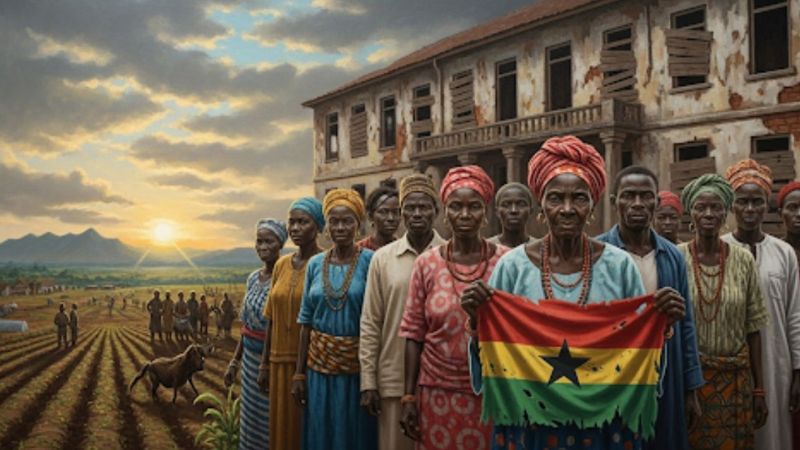
In this article we will see what the term postcolonial literature actually signifies and what leads to its characteristic themes and what are the must reads to come to grips with it completely.
In African literary tradition, to the South Asian and the Caribbean voices, you will find how these books critique the past, embrace cultures and address the current day. So shall we plunge into the tales of woe and glory, oppression and regeneration.
What is Postcolonial Literature?
Postcolonial literature can be defined as literature that appeared as an answer to cultural, political, and social changes of colonialism and imperialism.
It covers both works produced at the point when the colonial regime was coming to an end and works produced in the present that reflect on those pasts.
The word developed in several decades. The term post-colonial (hyphenated) initially was used to describe literature following decolonisation.
As time progressed, the unhyphenated postcolonial has grown to encompass an even more expansive range of works–those that reflect on legacies of colonialism, even when written decades (or more) after official colonialism came to an end.
Post-Colonial Themes in Literature
| Themes | Explanation | Examples |
| Identity and Hybridity | Focuses on how colonization affects cultural identity, mixing native and foreign elements. | Salman Rushdie’s Midnight’s Children |
| Displacement and Exile | Explores migration, forced movement, and loss of homeland. | V. S. Naipaul’s The Mimic Men |
| Power and Oppression | Shows how colonizers exercised control and the resistance of the colonized. | Chinua Achebe’s Things Fall Apart |
| Cultural Conflict | Highlights the clash between traditional culture and Western values. | Ngũgĩ wa Thiong’o’s The River Between |
Historical & Cultural Context | Post-Colonial Themes in Literature
Postcolonial writing is closely connected to the History. The legacies of the colonization period have benefited societies in maintaining political boundaries, economic systems and cultural systems of stratification.
Fiction is employed by many authors so as to challenge these inherited systems and re-embody the silenced voices.
Postcolonial works also have their origins in cultural traditions of telling stories, e.g., oral histories, myths, and folk tales.
These traditions are usually mixed with the western literary forms, or rather styles by writers, resulting in stories that seem to be more home than strange, though there are marked local rhythms, languages and worldviews.

Central Themes & Features
Of primary importance is hybridity and identity. The characters, described by postcolonial authors, may be seen between the cultures continuum; they may be discussing the issues of mixed heritage, language and values.
Homi Bhabha popularly referred to it as the third space (where new cultural identities are generated).
There is an immense influence of language. Lots of authors receive the previous colonist cultures and their languages and adapt them to local terms or use native words to imply the local color.
These works are also retellings of the past–reclaiming memory not only as it is portrayed by the colonizer but by the colonized.
There have been a lot of power and resistance, and this has also been accompanied by the notion of othering by cultures of power over which feature Dominant cultures designate others as inferior or exotic. The stylistic devices include non-linear narrative, mythic elements and poly-lingualism.
Significant Post colonial Writings in Literature-Major Examples
Things Fall Apart, and Igbo society Igbo society before British rule and under British rule Things Fall Apart is a classic of 1958 by Chinua Achebe that questions stereotypes in Western literature.
Midnight parents children Salman Rushdie (magic realism) Rushdies magin realism masterpiece follows the journey to Indian Independence from colonialism through the story of children born at midnight on 15 August 1947.
The Purple Hibiscus is the initial work of Chimamanda Ngozi Adichie as a novelist that discusses issues concerning family, religion, and political issues in postcolonial Nigerian state.
Exit West -Mohsin Hamid is a realistic story with a touch of fantasy, with the help of mysterious doors, the author of the book creates a story about migration and displacement.
The God of Small Things; Arundhati Roy has a novel in which a family tragedy, and with it a social and political history of Kerala, India is threaded together.
House of the Spirits by Isabel Allende is political history and magical realism merged in family chronicle with screens of Latin American colonial life.
Regional Perspective Of Post-Colonial Themes in Literature
African novelists such as Achebe, Adichie, and Ngũgĩ wa Thiong?o draw upon these cross-currents of cultural difference: the collision of traditional cultures with colonial systems, frequently in the wake of drawn borders.
Rushdie, Roy and Hamid the creators in South Asia touch at the Partition of India, the tensions that exist between religions and the emotional effects of migration.
There are many authors from the Caribbean and the Americas, including Derek Walcott, V.S.. Naipaul, or Toni Morrison who interweave histories of slavery, diaspora, cultural fusion.
The postcolonial literature in Southeast Asia, Middle East, and Europe diaspora recollects the reflections of war, displacement, and multiethnic identities of migrants.
Critical Approaches & Major Theorists
Orientalism by Edward Said (1978) transformed our ways of thinking about cultures representation and exposed the extent to which western discourses exoticized, and misprobed the east.
Theories of hybridity and third space put forward by Homi Bhabha show how cultural interaction is creating a set of new identities.
Subaltern studies by Gayatri Chakravorty Spivak pose the question: Can the subaltern speak? As colonialism intersected with gender oppression, postcolonial feminists criticized this phenomenon.
Why These Works are Important Nowadays
The reality of postcolonial texts is more often than not about history, but living texts that address what goes on in the current issues of identity, migration and inequality in the world.
They also keep the memory alive, they fight negative stereotypes, and provide space to interact across cultures.
In a world of globalization where differences can be rubbed out as effortlessly as we can access each other, these works serve as a good reminder that history is personal- and that stories are capable of holding us back.
Reading Postcolonial Works
Study the contextual background -Be able to learn about the historical and political background.
Notice language: Take notice about code-switching, idioms and floating words.
Seek themed interpretations- Symbolism, myth and time lines not in a straight line often bring a concealed comment.
Take up criticism syntax Read what others scholars and other readers have said to make your interpretation richer.
Short Recommended List of Readings
- The Fall of Things by Chinua Achebe (Africa, encounter with colonialism)
- Salman Rushdie, Midnight insurance (“South Asia, magical realism”)
- Arundhati Roy’s The God of Small Things (India, caste, and memory)
- Beloved -Toni Morrison (US slavery, memory and ghosting)
- The Season of Migration to the North: Tayeb Salih (Sudan, postcolonial identity)
- Waiting for the Barbarians – J.M. Coetzee (allegorical Apartheid-era)
- Names Needed Hillary Clinton (Zimbabwe, migration) NoViolet Bulawayo
Conclusion
This is why the postcolonial literature proposes access to histories that can be overlooked within the mainstream narratives. These works allow us to inquire who can tell history, and whose narratives we are yet to hear by mixing personal narratives with the reverberations of empire.
When we read works about post colonialism in English literature, we are not simply learning about the past, we are witnessing how this technology brings about the present as well as the coming time.
This is why they are irreplaceable not only by literature admirers but by everyone who wants to comprehend the world in which we live that is intricate and interconnected.
FAQ’s
A: It can be explained as the literature which was written under or after the colonial rule and investigates how it influenced culture, identity, and society.
Culture, identity and colonial legacies are the problems examined in Things Fall Apart, Midnight Children, the God of Small Things and Beloved.
Things Fall Apart has made Chinua Achebe the father of African postcolonial literature referred to.
After colonization, the predominant theme is power and the search for identity.
