Feminism is all about fairness and equality between men and women. It’s a movement that stands against unfairness in society where men get better treatment than women.
To understand it deeply, we need to look at its past, different ways it has evolved, the important ideas, the people who’ve been a big part of it, and why it still matters a lot today.
Defining Feminism:
Feminism is a socio-political and ideological movement urges up for gender equality in social, political, and economic areas. It addresses the inequality, discrimination, and injustices faced by women in a society.
This movement seeks to stand against patriarchal systems and aiming for a perfect and fair society.
History of Feminism:
Ancient Time History
While feminist concepts were not properly recognized in ancient times. Women in ancient times made strides in education and governance. But their achievements were often overlooked in historical records.
These women challenged societal norms and contributed to the groundwork for future feminist movements through their courage and bravery.
1st Wave of Feminism
The 19th and early 20th centuries marked the first wave of feminism. It focused on women’s suffrage and legal rights. Notable events include the Seneca Falls Convention in 1848, where the demand for a women vote rights gained momentum. This wave was the base and groundwork for future feminist endeavors.
2nd Wave of Feminism
The 1960s and 1970s witnessed the second wave of feminism, emphasizing broader societal problems beyond voting rights. This wave addressed reproductive rights, workplace inequality, and sought social and legal reforms.
Moreover, activists and intellectuals during this period brought attention to pervasive issues, igniting discussions on gender roles and challenging traditional stereotypes.
3rd Wave of Feminism
Emerging in the 1990s, the third wave aimed to include diverse voices, addressing issues like intersectionality, sexuality, and gender identity. It focused on recognizing and embracing the experiences of women from various areas.
This wave acknowledge the complex and intersecting nature of discrimination faced by women worldwide.
4th Wave of Feminism
The current phase, the fourth wave, it’s a time of technology and social media to boost feminist activism. It tackles online harassment, reproductive justice, and gender-based violence while emphasizing global solidarity.
This wave showcases the power of digital platforms in fostering dialogue, mobilizing support, and challenging societal norms on a global scale.
Types Of Feminism:
Liberal Feminism
Liberal feminism advocates for equal rights within the same existing societal structures. It focuses on legal reforms and policies to ensure equal chances for women in education, employment, and politics.
This ideology seeks to bring about incremental changes within established systems, promoting legal and policy changes to attain gender equality.
Radical Feminism
Radical feminism critiques the root causes of women’s oppression, seeking to stand against patriarchal structures. It challenges societal norms, aiming for a complete transformation of social systems to achieve gender equality.
In addition, this ideology emphasizes for the fundamental changes in social, political, and economic structures to eliminate gender-based discrimination entirely.
Marxist Feminism
Marxist feminism looks at how money and power affect women. It talks about how money and structure of society can create inequality for women and fights for economic and social change.
Eco-Feminism
Eco-feminism connects the way women are treated. It says both are harmed by the same ideas of power and control and wants to fix that by caring for the environment and supporting women’s rights.
Characteristics Of Feminism:
Advocacy for Gender Equality: Feminism is about making sure everyone, no matter if they’re a man, a woman, or any other gender. They gets treated fairly and has the same chances in life.
Challenging Patriarchy: Feminism works to change the way, society puts men in charge and treats them better than women, aiming for a world where everyone is seen as equal, regardless of gender.
Intersectionality: Feminism cares about how different unfair things—like race, money, who you love, or ability—can make life difficult for people along with gender. It wants to set all unfairness together.
Inclusivity and Diversity: Feminism is about welcoming everyone, respecting their differences, and supporting each other no matter our backgrounds or who we are.
Social and Political Activism: Feminism isn’t just talking—it’s about doing things to make life better for everyone, like fighting for fair rules and changing how society thinks about gender.
Critique of Gender Norms: Feminism questions why society expects boys and girls to act a certain way. It wants everyone to feel free to be themselves without fitting into old-fashioned ideas.
Empowerment and Agency: Feminism wants everyone to feel strong and able to decide things for themselves—like what they want to do in life, how they want to look, and who they want to be.
Historical and Contemporary Context: Feminism looks at how things were in the past, but it’s always changing to fix new problems today. It learns from the past but keeps growing to make things better for the future.
Gender And Identity:
Gender and identity are about how we feel inside and show who we are. It’s not just about being a boy or a girl. Our identity is everything that makes us different, what we like and how we act.
It is important to be kind and accept everyone because we all feel and show who we are in different ways.
Famous Feminists:
Many individuals have significantly contributed to feminist ideologies. Icons like Simone de Beauvoir, bell hooks, Gloria Steinem, Audre Lorde, and Angela Davis have shaped feminism through their writings, activism, and advocacy.
Their works have not only inspired generations but also challenged societal norms, catalyzing change and empowering future generations of feminists.
Modern-Day Woman
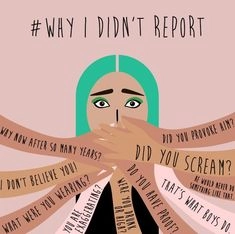
In contemporary society, feminism remains pivotal. It continues to address wage gaps, reproductive rights, gender-based violence, and the dismantling of systemic biases. With movements like #MeToo and global advocacy, feminism’s impact persists in reshaping societal norms.
Furthermore, today, feminism’s relevance is evident in ongoing discussions, policies, and movements worldwide, highlighting its unwavering importance in fostering an equitable and just society
Feminism means everyone gets treated fairly, no matter if they’re a boy, a girl, or anyone else.
Feminist literary theory looks at how stories talk about men and women and fights for fairness in those stories.
Feminism changed stories by making stronger, more interesting female characters and talking about fairness for women.
There isn’t one single founder—many people like Virginia Woolf and Simone de Beauvoir helped make these ideas grow.