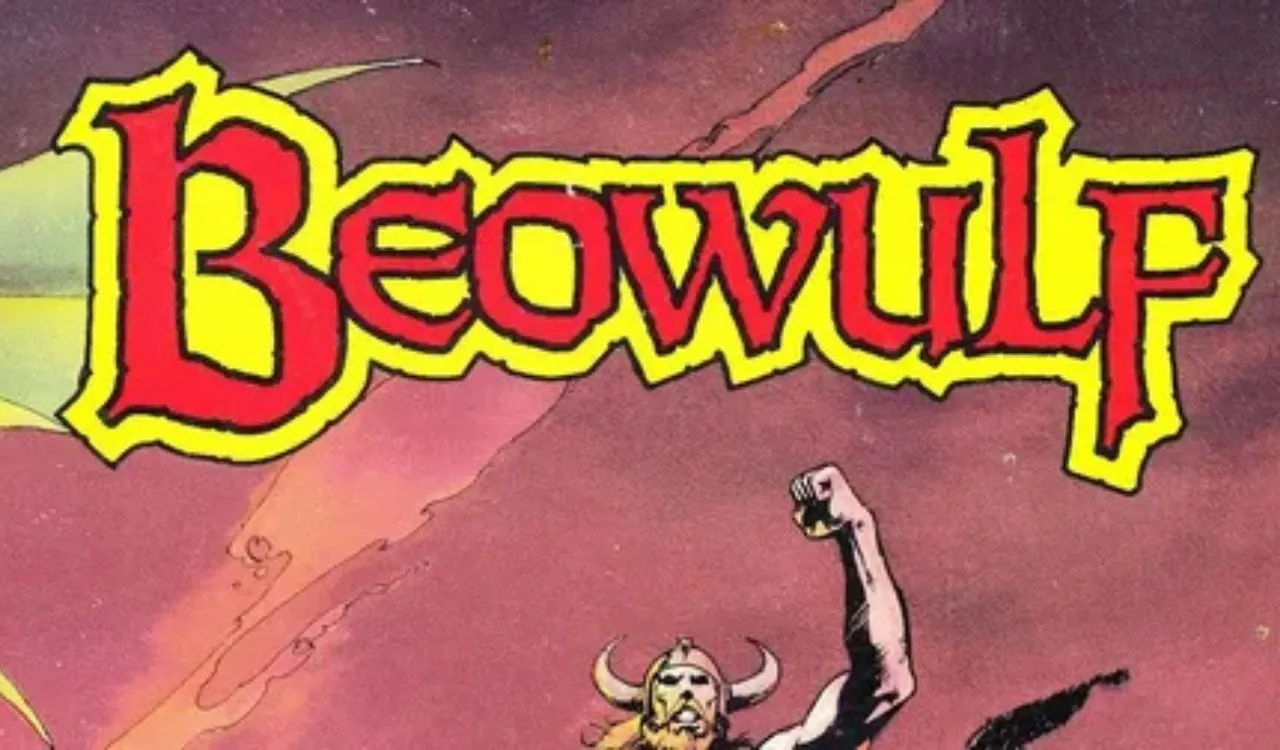
I still remember the first time I opened the coming of Beowulf graphic novel and felt the ancient legend suddenly come alive in a completely new way. As opposed to the tiresome blocks of unbroken Old English verse, the tale was told in the form of strong drawing, fierce battle, and dramatic personages.
This graphic version of the epic hero Beowulf makes the novel much easier to digest for anyone who has heard the story but then struggled with the original poem. It is a vivid immediacy that encapsulates the courage of the Scandinavian warrior, the terrific aura of monsters such as Grendel, and the drama of early medieval legends.
When I read further about graphic adaptations of Beowulf, I also realised that contemporary creators can easily simplify traditional literature through visual storytelling. Other comic creators, like Gareth Hinds, have reshaped the ancient epic into engaging illustrated stories.
These versions preserve the atmosphere of the original story while making it easier to read and follow by using detailed panelling, atmospheric colouring, and dialogue adapted for modern readers, students, and fantasy lovers. This is precisely the reason why this subject is so intriguing to me.
The graphic novels have the potential to fill the gap between traditional literature and current storytelling. This paper will discuss the mechanisms behind these adaptations, why they are gaining popularity, and why they are an interesting way to experience one of the most legendary tales in world history. This is in case you have ever been interested in Beowulf and needed a more engaging means to absorb the story.
What Is The Coming Of Beowulf Graphic Novel
The term “the coming of Beowulf” is typically used to describe a retelling of the well-known Anglo-Saxon epic in comic form. Rather than presenting the poem as is, the story is introduced through visual panels that combine dialogue, narration, and artwork. Beowulf takes readers on his journey as he sails across the sea toward the Danish king Hrothgar to assist him in defeating a monstrous creature known as Grendel.
Graphic novel versions preserve the basic plot but present it in a much easier manner. The book’s readers can observe battle scenes, emotional expressions, and atmospheric landscapes that elucidate the story without relying solely on the text. The rhythm is also dissimilar.
The sequences of action move quickly, and the quiet scenes allow the artwork to convey fear, courage, or tension. Due to their visual narration, graphic novels make it easier for readers to understand the journey of the legendary hero. The epic story does not read like ancient history but rather like a movie unfolding on the page.
The Origins Of The Beowulf Epic Story
The story of Beowulf had already been passed down through the Northern European oral storytelling tradition long before the advent of graphic novels. It is thought that the poem was composed between the 8th and 11th centuries. It is commonly regarded as one of the most crucial works of Anglo-Saxon literature.
The story of a courageous warrior, Beowulf, follows him to Denmark to assist King Hrothgar in destroying a beast threatening his land (Geatland). The poem touches on issues of courage, dignity, faithfulness, and the battle between good and evil. There are three significant enemies that Beowulf fights in the story.
Firstly, there is Grendel, an animal that enters the royal hall at night. His next encounter is with Grendel’s mother in an underwater fight. Lastly, he is an elderly king battling a monstrous dragon that is poised to destroy his subjects. These mythical battles transformed Beowulf into one of the most sustained heroic epics in world literature. The contemporary versions are merely a re-creation of the story to suit the present times.
Why The Beowulf Story Works Perfectly As A Graphic Novel
Certain traditional tales translate poorly to visual media, yet Beowulf nearly belongs in the graphic novel. The story is also packed with drama, monstrous elements, and emotional scenes. This can be transferred to illustrated panels very well, allowing it to be demonstrated rather than merely described. The hero himself is larger-than-life. He is powerful, courageous and motivated by honour.
When seen facing Grendel or diving into a dark river to fight a supernatural creature, the image is memorable. Through the artwork, readers can almost experience the tension of every battle. The other benefit is pacing. Graphic novels allow designers to control the pacing of scenes. A single dramatic panel can convey a tinge of suspense more effectively than several paragraphs of description. This balance between art and storytelling makes Beowulf easier to comprehend and much more thrilling for contemporary readers.
Famous Adaptations Of The Coming Of Beowulf Graphic Novel
Some of the creators have reenacted the epic narrative in illustrated forms. The graphic novel by Gareth Hinds is one of the most admirable ones. His interpretation remains faithful to the original poem but makes strong use of watercolour, conveying the sombre presence of early medieval legends. Another famous adaptation was by Santiago García and artist David Rubin.
Their adaptation is full of energetic, expressive drawing and active panel composition, which emphasise the severity of the battles. The graphic design is contemporary, dynamic, and filmic. Every adaptation has a somewhat different experience. Some emphasise historical accuracy, while others emphasise visual drama. Yet all share the same goal. They can make the old epic readable to contemporary readers without losing the essence of the original legend.
The Legendary Battles That Define Beowulf
The legendary battles that make up the story are not discussed in Beowulf. These conflicts are central to this epic. The initial battle takes place as Beowulf fights Grendel, a monstrous being attacking the Danish hall Heorot. The graphic adaptation of this moment is depicted with crude severity in most cases. Panels commonly depict broken doors, terrified warriors, and Beowulf battling the monster with pure brute strength.
The second battle is fought beneath a dark lake, and Grendel’s mother seeks revenge. Supernatural tension and weird settings arise from this struggle. Artists frequently highlight dangerous situations with dark colours and intense lighting. The last fight occurs many years later, in which Beowulf encounters a dragon. At this stage, he is an old king, but he is not fighting to earn glory. This scene is both heroic and tragic in the mythical tale.
Visual Storytelling And Artistic Style In Beowulf Graphic Novels
The creative use of visual storytelling is one of the most interesting aspects of the Beowulf graphic novel. Artists use colour palettes, character expressions, and panel arrangement to help readers follow the story. When monsters are involved or there is a night battle, colour schemes tend to be dark, but when victory or celebration is occurring, the colour scheme is usually bright. Body language is another way illustrators express emotions.
An uplifted sword may symbolise bravery. The dark figure could indicate a threat. These graphic expressions enable the reader to interpret the story despite the lack of many words. Various adaptations select various artistic ways. Others focus on realism, featuring fine armour and landscapes. There are others whose art is stylised, thus emphasising movement and dynamism. Despite the style, the illustrations contribute to the legend’s mythical essence.
A Classroom Moment That Shows The Power Of Graphic Novels
One of the literature teachers once made an easy observation. The language used in both Beowulf poems made many students find the original poem hard to read, as they found it confusing and distant. However, when the class presented a graphic novel version, something was different. And all at once the story made sense.
The students have started discussing the characters, studying the combat scenes, and debating the hero’s decisions. The graphical boards helped them understand the sequence of events and their emotional interests. One student even claimed that the monsters were real to him at last.
This little classroom scene is an example of the power of storytelling through visual means. Graphic novels never substitute traditional literature. They serve as a bridge, allowing the reader to feel the story’s nature without delving into the depths of the original text.
Why Modern Readers Love The Coming Of Beowulf Graphic Novel
The world of modern viewers is covered with visual media. The films, games, and digital storytelling influence how individuals encounter narratives. The graphic novels are inherently in this place because they are literature with the visual interest of movies. Readers like that it allows them to relate to the characters quickly.
The artwork provides context on the spot rather than depicting every scene from a written illustration. This helps keep the reader engaged, particularly among younger or new readers of classic literature. Accessibility is also one reason they are popular.
A graphic novel can be read by an ordinary reader, a literature student, or a comic lover who wants to read mythological tales. Its structure renders the epic fresh without sacrificing the emotional burden that made Beowulf an epic in the first place.
Conclusion
Beowulf is a story that stands the test of time because of its relevance to the timeless human values it explores. Courage in the face of danger. Loyalty to one’s people. The battle between mortality and heroism. Adaptations of graphic novels merely portray these themes in a different way that appeals to the contemporary reader.
Beowulf is presented in the graphic novel in a modern way through strong art, dramatic pacing, and a narrative style that offers a fresh look at the ancient legend. The monsters are frightening. The hero feels human. And the epic voyage is shot through with the film’s intensity on illustrated pages.
The graphic novel version provides an ideal entry for anyone interested in classic literature who fears becoming buried in the complex texts of ancient authors. It demonstrates that even a thousand-year-old story can come to life today.
Frequently Ask Questions
What does The Coming of Beowulf Graphic Novel represent?
The Beowulf graphic novel is a retelling of the old epic, told through graphic storytelling. It proceeds through his quest to do away with monsters like Grendel and Grendel’s mother, and finally a dragon.
Who did the best Beowulf graphic novel?
Gareth Hinds made one of the most respectable adaptations. A second popular adaptation is that by Santiago
García and the artist David Rubin. Is Beowulf a graphic novel appropriate for students?
Yes. According to many teachers, adapting graphic novels is beneficial because it helps students understand the story, characters, and themes, and then read the original poem.
What is the level of Beowulf’s graphic novel adaptation accuracy?
The majority of graphic novel adaptations faithfully depict the epic poem’s key events, making the language easier to read while highlighting the visual narrative.
What is the point of transforming such traditional tales as Beowulf into graphic novels?
Graphic novels render traditional literature easier to read. They blend art and storytelling to help contemporary readers comprehend and savour texts that would otherwise be challenging.